

How Does the EMS Meaning in Manufacturing Translate Into Strategic Cost and Supply Chain Advantages?
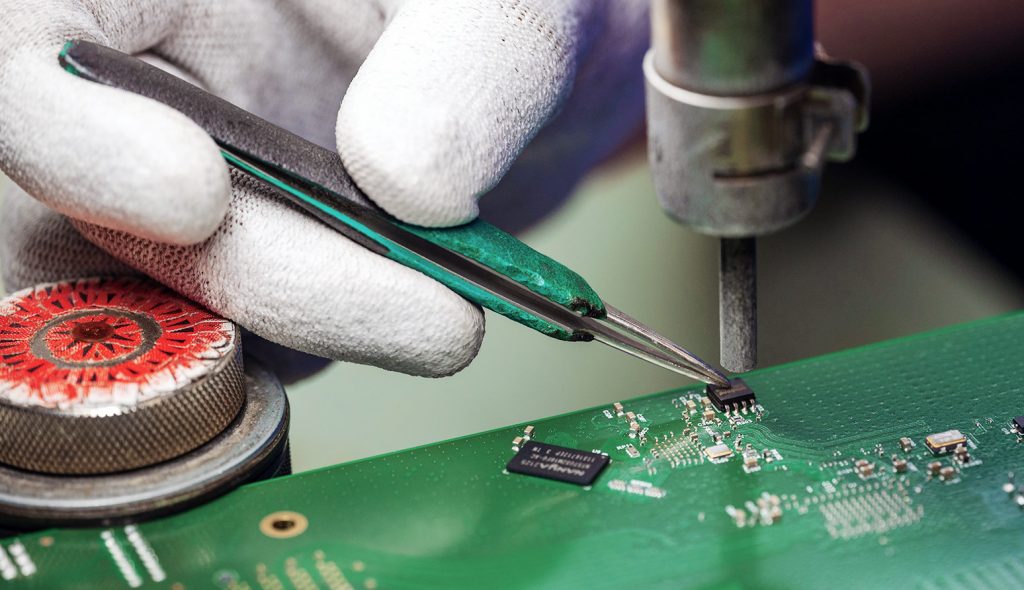
The EMS meaning in manufacturing is simple: a specialist builds and tests electronics that the OEM designed and owns. The strategic value is the choice it opens up: an OEM doesn’t have to choose between a factory and no factory, so it can decide, activity by activity, what to keep. That turns some fixed production costs into variable ones and adds sourcing options, but the savings hold only when the split follows control needs, engineering capacity, and long-term volumes.
Key points
- Treat make-or-buy as separate decisions.
- Keep what differentiates the product and outsource what a specialist can run at higher utilization.
- Compare total cost, as a piece price omits logistics, inventory, and supplier management.
What does EMS stand for in electronics?
In electronics, EMS stands for electronics manufacturing services: contract manufacturing of electronic assemblies and finished devices for an original equipment manufacturer (OEM).
The OEM provides the product design, while the EMS handles manufacturing. Our full-cycle EMS services span the product lifecycle, from industrialization and PCB assembly to testing, box build, packaging, logistics, and after-sales support.
How does the EMS meaning in manufacturing change a make-or-buy decision?
In practice, the EMS meaning in manufacturing comes down to a menu of activities that can stay in-house or move out. Strategy& weighs such choices against business strategy, risks, and economic factors (1). As a rule of thumb:
|
Activity |
Keep in-house when |
Outsource when |
|---|---|---|
|
Product design, firmware |
It is what customers pay for |
Rarely |
|
Prototyping, industrialization |
Designs change weekly |
Production experience is limited |
|
PCB assembly |
The process itself is proprietary |
Your volumes cannot fill an SMT line |
|
Test development |
The method exposes protected know-how |
Engineers are needed on new designs |
Which business factors decide what stays in-house?
Control over critical processes
Start with the crown jewels: processes that would expose know-how or weaken what makes your product different typically belong in-house. For example, HackMotion develops its design and proprietary software in-house, while we manufacture its devices from SMT assembly to final packaging.
Even when the OEM keeps ownership of the design, the partner still works with the design files and often creates production data and tooling. That’s why the contract should define who owns test software, fixtures, and production data, and what happens to them if the relationship ends.
Internal engineering capacity
Next, look at your team. Since developing specialized skills in-house takes time and resources, be realistic about what your team can handle. If your engineers spend their week on yield problems, count that in the comparison.
List what your engineers do across a build cycle: line setup, AOI and ICT program maintenance, yield analysis, or fixture development. Work that depends on product knowledge, such as defining test limits or analyzing field returns, is hard to hand over. But work that depends on process knowledge, such as reflow profiling or AOI tuning, usually transfers more easily to a partner.
Long-term production scalability
Finally, look ahead. Model the volume curve, then ask who pays for idle capacity at each point. Ramp-ups can change the process too: in 2023 we supported a Nortroll project five times larger in volume than its earlier production, which took new methods to manage the higher volume.
Small volumes can justify a partner as well, because a low-volume product may not fill an SMT line alone, which is why we run manual assembly lines for low-volume work. But the same partner can also cover large volumes. For MikroTik, we provide full-cycle manufacturing: alongside prototype batches, we mass-produce its products from SMT assembly to final packaging.
Where do the cost advantages come from, and where do they disappear?
Savings come from shared capacity, purchasing volume, and lower fixed investment. The catch is that a one-time quote doesn’t tell you the whole story. Strategy& lists the costs most often ignored when outsourcing manufacturing (1), including:
- shipping and handling
- larger inventories
- supplier management and quality control
- added complexity in lean flows
Compare the total cost of a finished, tested unit, and make sure your processes are in good shape before outsourcing, as fixing existing issues will likely add to the cost.
How does the EMS model build supply chain advantages?
Beyond cost savings, EMS can give you access to more suppliers and an experienced team that can help manage component shortages. During the COVID-19 supply chain disruptions, for example, we worked with Cavotec to find alternative components, source from new suppliers, and split batches to keep partial deliveries on schedule.
Deciding who handles purchasing is another important part of the arrangement. A survey of US-based electronics OEMs by Brewer et al. found that firms were more comfortable outsourcing tactical procurement, and left strategic activities to the contract manufacturer only when the product was highly commoditized or the manufacturer controlled access to international resources the OEM couldn’t leverage itself (2). So procurement doesn’t have to move as a block: routine buying can go to your partner while strategic sourcing stays with you.
If you’re exploring EMS for your product, get in touch with our team to discuss possible ways to work together.
You may also like: Strategic Advantages: Why Partner with Electronics Manufacturing Services in Eastern Europe
Sources:
(1) Booz & Company (now Strategy&), Make or buy, 2011.
(2) Brewer B., Ashenbaum B., Carter J., Journal of Supply Chain Management, 2013.